
EU Wind Power Package
Wind energy manufacturing, together with other competitive net-zero industries, supports the fast transition to climate neutrality, while creating growth and jobs for the EU.
The Commission presented 2 wind power initiatives on 24 October 2023, referred to as a package and aiming to accelerate wind energy manufacturing and deployment in Europe.
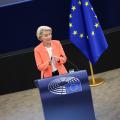
Our wind industry, for instance, is a European success story. But it is currently facing a unique mix of challenges. This is why we will put forward a European Wind Power Package.
European Wind Power Action Plan

The Action Plan (COM/2023/669) is based on 6 pillars: acceleration of deployment through faster permitting and increased predictability, improved auction design, access to finance, creating a fair and competitive international environment, skills, industry engagement and EU country’s commitments. It includes 15 actions to be urgently undertaken by the key public and private actors involved.
Following up on 2 of the Action Plan measures, the vast majority of EU countries, together with many leading industry representatives, signed a European Wind Charter on 19 December 2023 in which they agreed to a set of voluntary commitments to support the development of Europe’s wind sector. At the same occasion, 21 EU countries submitted their concrete pledges on wind energy deployment volumes for at least the period 2024-2026. The pledges show their commitment to accelerate and ramp-up the deployment of wind in the EU, both onshore and offshore.
Communication on achieving the EU’s offshore wind ambitions
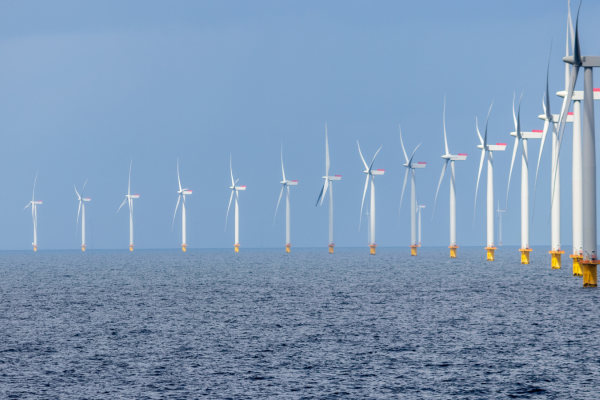
The Commission communication (COM/2023/668) confirms the need to accelerate investment in offshore wind, as well as ocean energies.
With the cumulative offshore installed capacity amounting to 16.3 GW, new offshore installations must increase to almost 12 GW per year on average to reach EU countries’ commitments. That is 10 times more than the 1.2 GW installed in 2022.
The communication identifies 6 areas where progress would help speeding up the roll out of offshore capacity
- strengthening grid infrastructure and regional cooperation
- accelerating permitting
- ensuring integrated maritime spatial planning
- strengthening resilience of infrastructure
- sustaining research and innovation to supporting offshore renewable energy
- developing supply chains and skills
Wind power facts
Wind is a clean, free and abundant energy source used to generate electricity. A wind farm is a group of wind turbines that can cover several square kilometres of land or sea to harness either onshore or offshore wind.
Continued improvements in manufacturing and turbine design combined with improved capacity factors (more MWh of electricity generated per MW of wind turbines installed; for example, thanks to more performant turbines and/or better localisation) have driven down the costs of wind power and reaffirmed its position as a key driver of the clean energy transition.
According to Eurostat, wind accounted for over one-third (37.5%) of the total electricity generated from renewable sources in the EU in 2022. The below key figures, are based on data from Eurostat and WindEurope and show a steady increase in EU’s wind generation capacity, but it is not enough to meet the energy and climate targets by 2030. Therefore, the EU and the wind industry have committed to ramp up both onshore and offshore wind in the coming years.
EU wind generation capacity
The wind sector is also a significant contributor to the EU economy, boosting growth and creating long-term sustainable jobs. According to Wind Europe’s competitiveness report 2023, the wind industry provided around 300 000 jobs in the EU in 2022. Under the REPowerEU targets, the number of jobs is estimated to grow to 936 000 by 2030.

- New Wind Charter and national wind pledges underline ambition for wind power in Europe (19/12/2023)
- EU Wind Power Package – press release, questions and answers, factsheet (24/10/2023)
- European Wind Charter (of 19/12/2023 - updated in April 2024)
- Wind Pledges - European Wind Power Action (19/12/2023)
- Wind energy (DG Research and Innovation)
- European technology and innovation platform on wind energy (ETIP Wind)
- EurObserv'ER wind energy barometer 2022
- Renewable Energy Directive (2018/2001/EU)
- European Green Deal
- International Renewable Energy Agency